The Life and Legacy of James Ho and Rose Tattoo
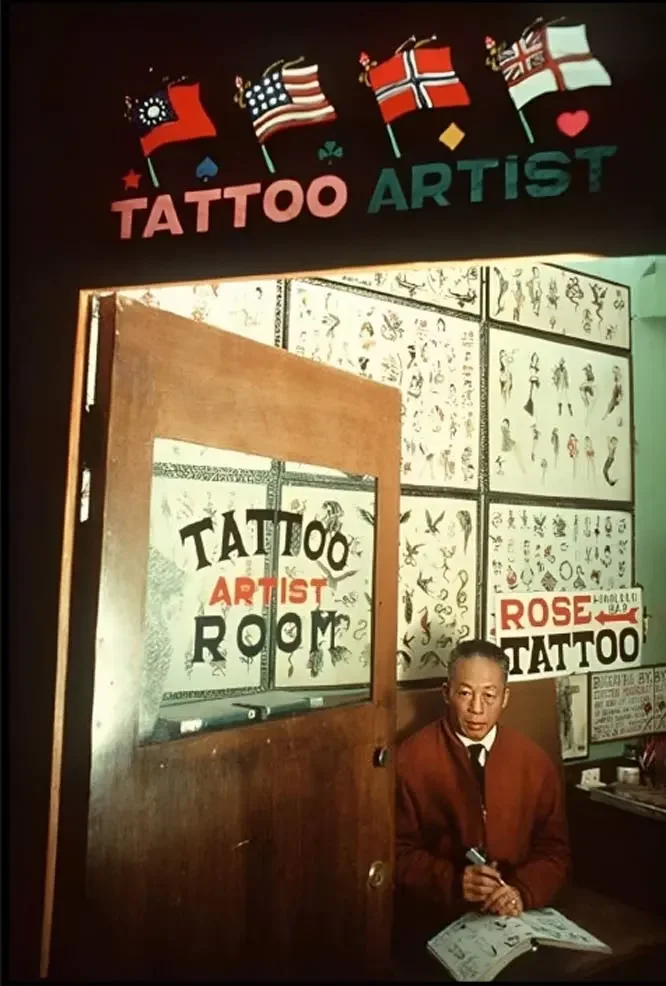
James Ho Tattoo Artist
Origins: From Engineer to Tattoo Pioneer
The story of James Ho—often regarded as the founding figure of modern tattooing in Hong Kong—begins far from the neon streets of Kowloon. Born in Shanghai in 1903, Ho was originally trained as a marine engineer and spent his early life working aboard cargo ships traveling throughout Southeast Asia.
His life took a dramatic turn during World War II. In 1940, while sailing across the Indian Ocean, his ship was struck by a Japanese torpedo. Ho survived by clinging to wreckage before being rescued by an American warship and taken to Calcutta.
It was during his recovery in India that Ho encountered tattooing for the first time. Fascinated by the hand-poked tattoos worn by soldiers and created by local artists, he became obsessed with the craft. Recognizing the crude nature of the tools being used, Ho began experimenting with improvements—applying his engineering background to redesign tattoo machines using mechanical and electrical components.
“He came back and made a tattoo machine with bike chains and other parts.” says Ho’s protege, Justin Ng
This moment marked the birth of his second life—not as an engineer, but as a tattoo artist.
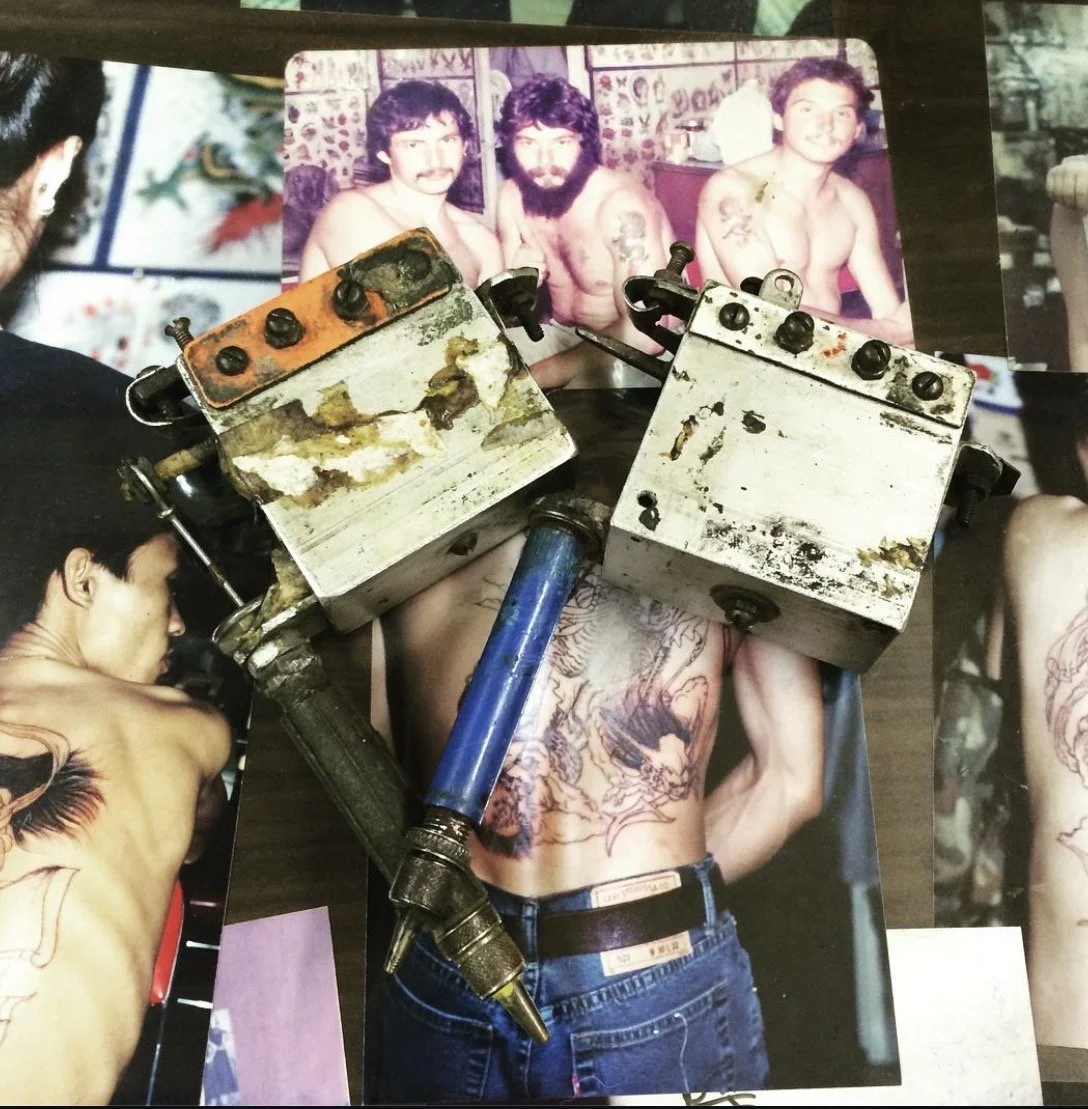
Homemade rotary machines by Ho @jimmyhotattoo
Founding Rose Tattoo: Hong Kong’s First Tattoo Studio
After the war, Ho returned briefly to Shanghai, where he refined his tattoo machines and began tattooing professionally, and adopting the style of tattooing he had been exposed to from the American soldiers with bright colors, bold lines, and classic imagery. However, political instability in post-war China forced him to relocate. He moved his family to Hong Kong, where he would make history.
Around 1946, Ho established Rose Tattoo, widely recognized as the first professional tattoo studio in Hong Kong.
Located in Tsim Sha Tsui’s Rose Hotel—then a bustling port district—the shop quickly found its clientele among foreign sailors, particularly American servicemen passing through Hong Kong during the Korean and Vietnam wars.
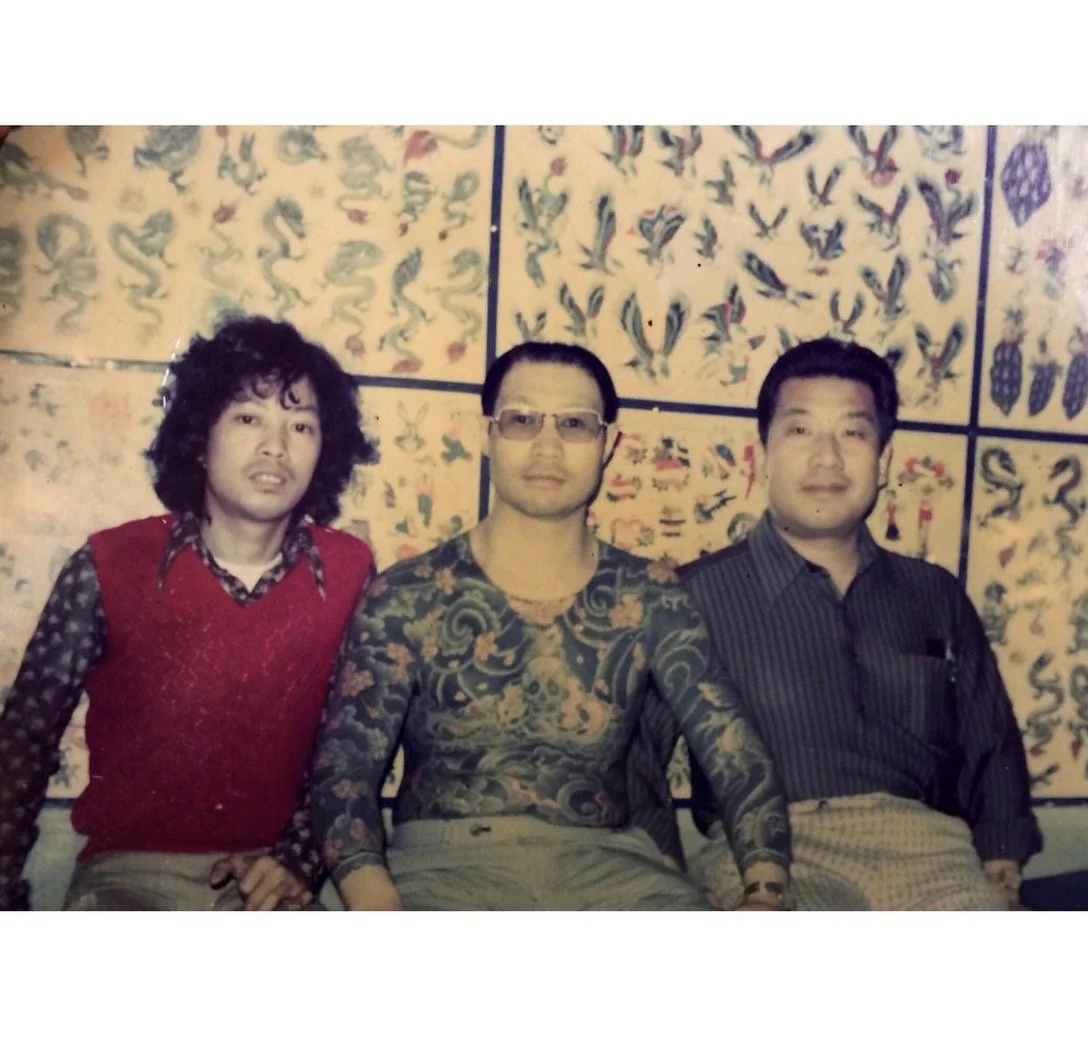
James Ho at Rose Tattoo 73-74 @jimmyhotattoo
At the time, tattooing in Hong Kong was heavily stigmatized among the local Chinese population, often associated with triads and criminality. As a result, Ho’s early business depended largely on transient Western customers.
Despite this, Rose Tattoo thrived. For many of the American servicemen, the point of acquiring ink was to show off where they had been or things accomplished during their time in service. They were obliged by Hong Kong tattooists who adapted the American style by introducing imagery such as dragons, koi and tigers, bringing with them oblique conventions, symbolism and references from Chinese culture.
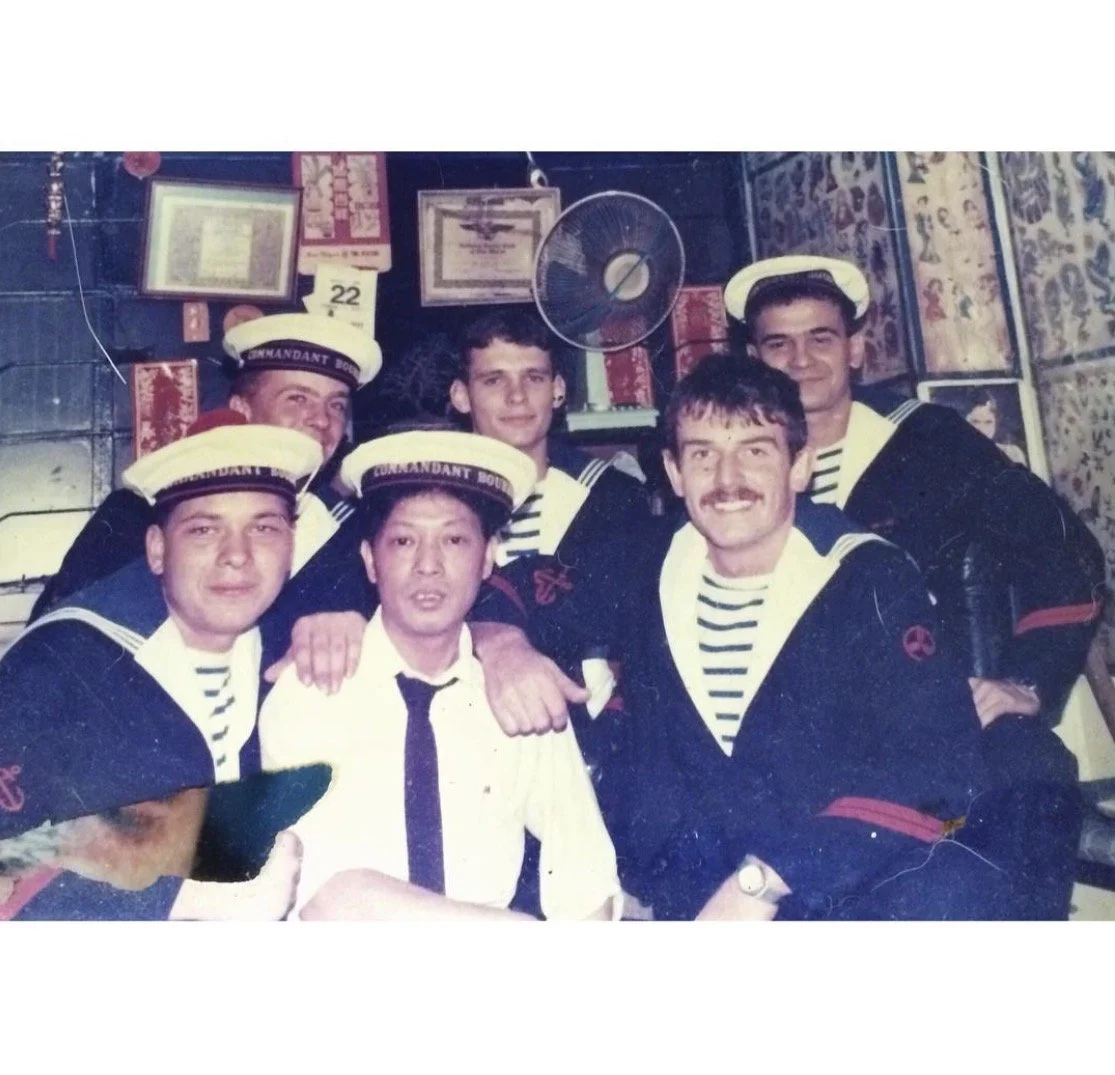
Son, Jimmy Ho with clients @jimmyhotattoo
Style and Influence: East Meets West
American roots, Japanese influence, Chinese subject matter
Ho’s work became the foundation of what would evolve into a uniquely Hong Kong tattoo aesthetic. Drawing from his exposure to maritime culture, his designs initially reflected American traditional tattooing—bold lines, bright colors, and classic motifs such as hearts, eagles, daggers, and pin-ups.
Over time, these Western influences merged with traditional Asian imagery, including dragons, koi fish, and tigers, forming a hybrid style that would define Hong Kong tattooing for decades.
The blending of the two influences would include the bold imagery but with intricate symbolism tied into every tattoo.
A tiger going downhill, signifies that they are hunting, but a tiger going uphill is returning to his lair, defeated. It means you’ve failed or given up.
Representing power and luck, dragons are the apex cryptid amongst Hong Kong’s imaginary beings. The taxonomy of Asian dragons is varied; Hong Kong’s species generally have four claws and short mouths, says Ng, while Japanese dragons have three claws and long muzzles. Since imperial times, claws have denoted rank and tattooing a five clawed dragon is considered gauche. “Only an emperor’s dragon should have five claws,” says Ng. “It’s too much. You can’t just erase a claw on a day when you’re feeling less arrogant.”
Traditions are important – but can be defied. “I’d like to buck convention a bit,” says Ng. “These days I’d do tigers going uphill because the poses are dynamic. Jimmy taught these rules but it’s up to me if I want to follow them. I agree with some old practices.”
Ho’s engineering mindset also influenced the technical side of tattooing in the region. By improving machine design and standardizing equipment, Ho helped professionalize a craft that had previously been informal and inconsistent.
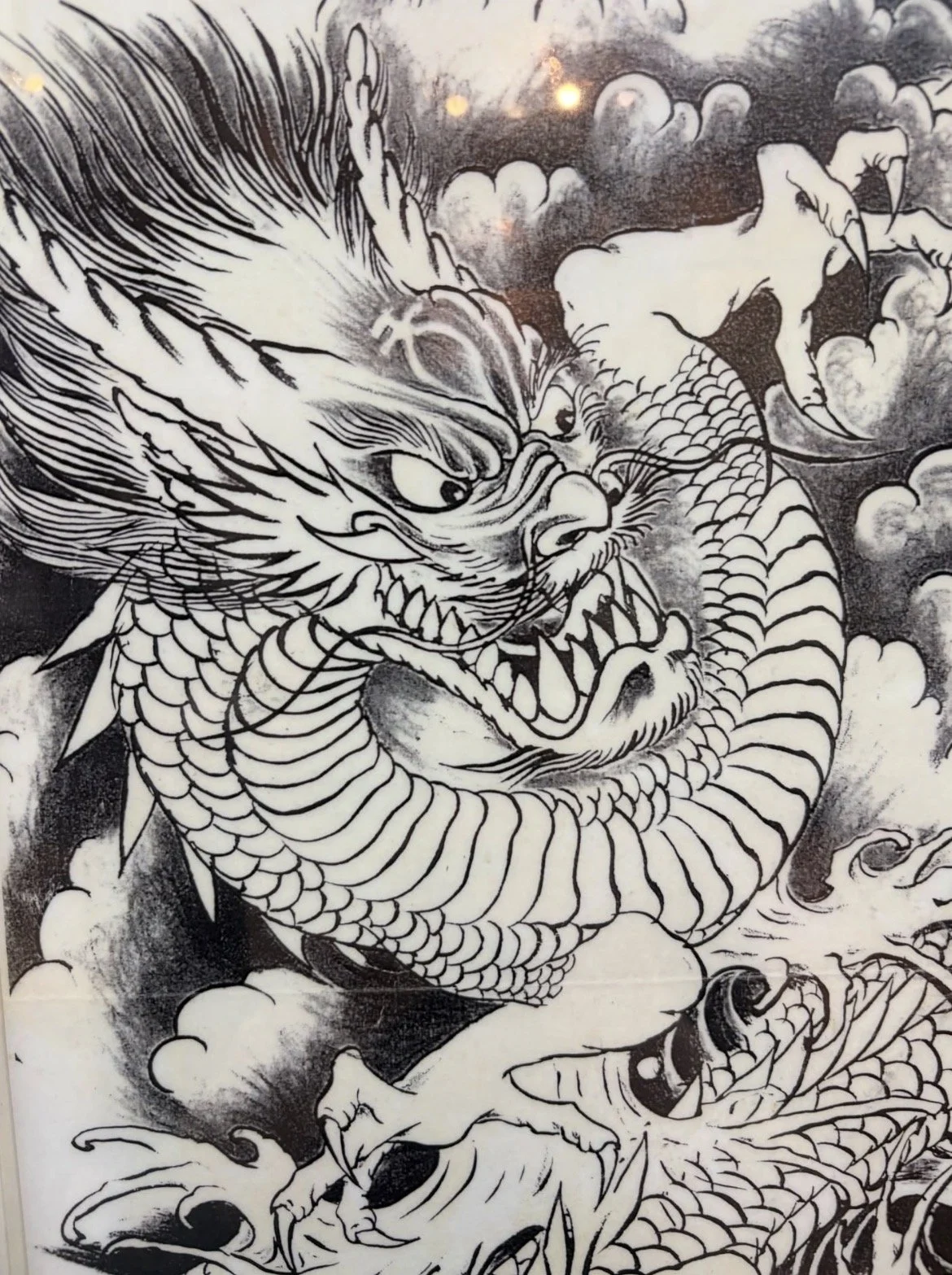
Dragon flash design done by James Ho
Building a Tattoo Dynasty
As demand grew, Ho expanded Rose Tattoo into a training ground for future legends. He took on apprentices who would go on to shape the next generation of Hong Kong tattooing, including figures like Ricky Lo and Pinky Yun.
Through his apprentices, Ho created a lineage that extended far beyond his own shop. His students opened their own studios, spreading his techniques and aesthetic across the city.
Among those most influenced by him was his son, Jimmy Ho, who began tattooing at a young age and would later become one of Hong Kong’s most famous tattoo artists.
Jimmy’s career—spanning decades and including clients from movie stars to gang figures—helped cement the Ho family’s legacy as central figures in Hong Kong tattoo history.
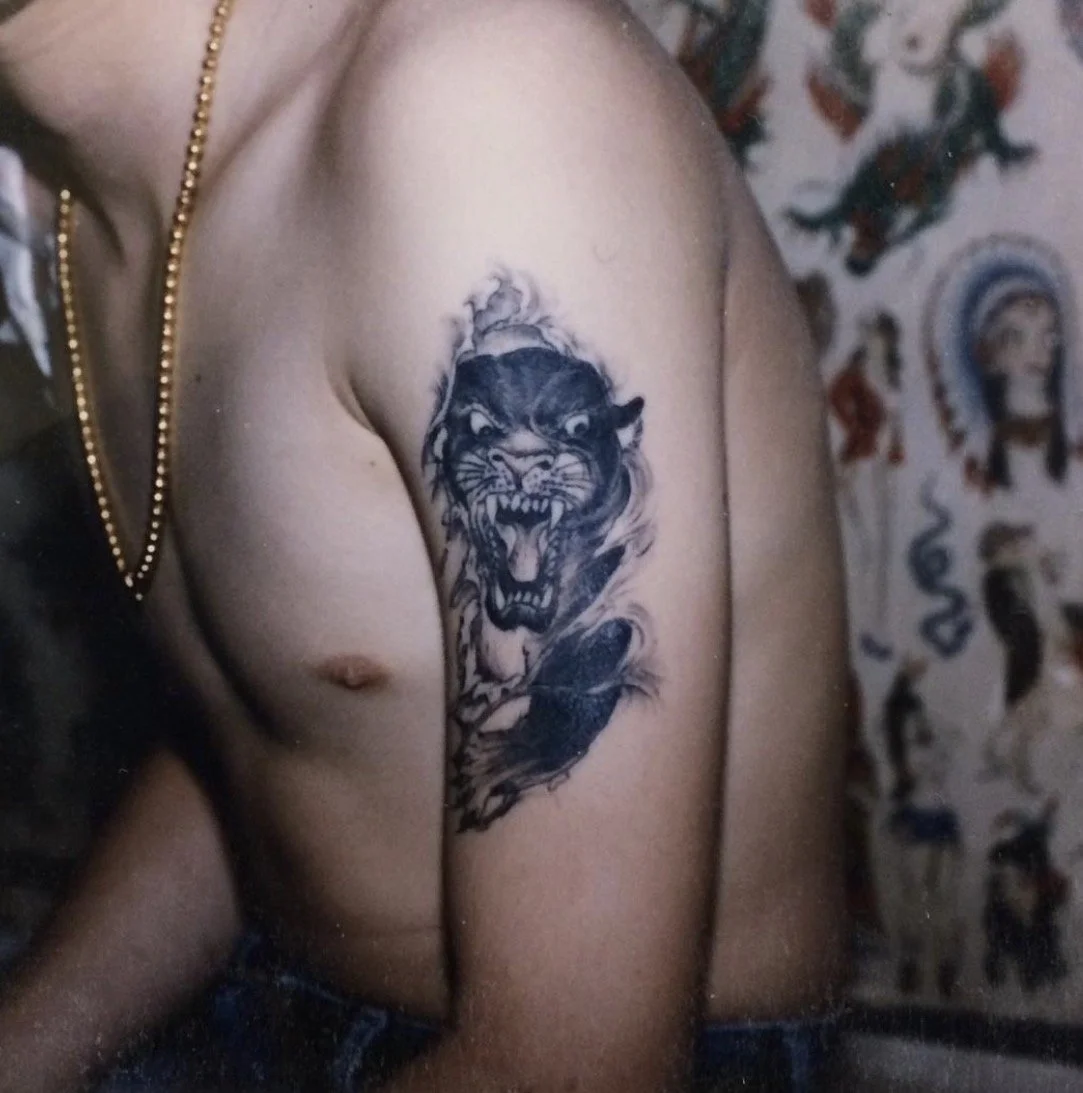
Panther tearing through skin tattoo done by Jimmy Ho
Cultural Impact: From Taboo to Mainstream
During Ho’s early years, tattoos in Hong Kong were widely viewed as symbols of rebellion or criminal affiliation. Respectable members of society avoided them entirely.
Yet through the visibility of Rose Tattoo and its steady stream of international clients, Ho played a key role in shifting perceptions. His studio became a cultural crossroads—where Western sailors, local artists, and evolving artistic traditions intersected.
By the late 20th and early 21st centuries, tattooing in Hong Kong had transformed into a respected art form, with studios emerging across the city and younger generations embracing tattoo culture.
This transformation can be traced directly back to the groundwork laid by James Ho.
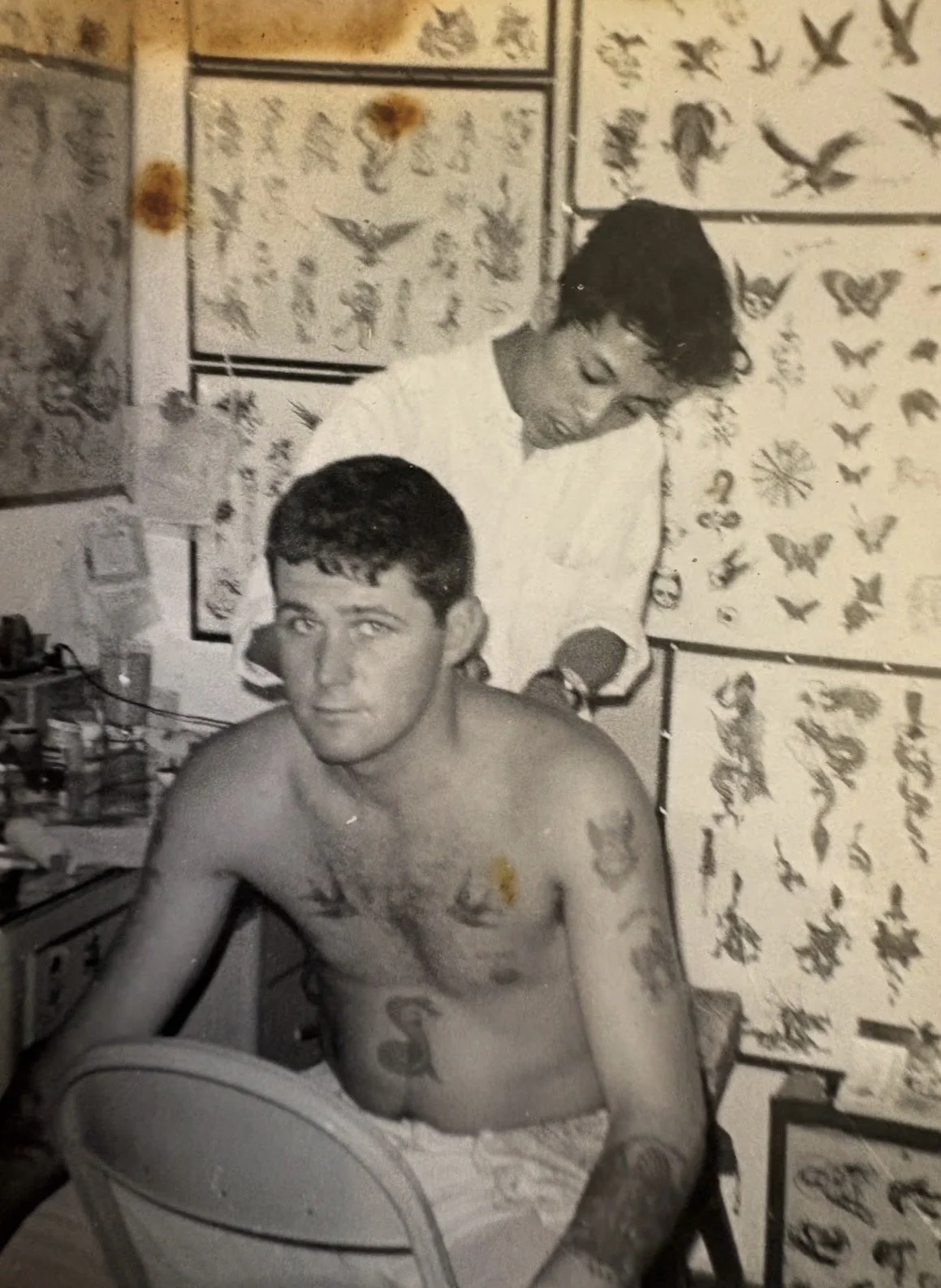
Son, Jimmy Ho tattooing @jimmyhotattoo
Legacy
Today, James Ho is widely regarded as the father of Hong Kong tattooing. His creation of Rose Tattoo marked the beginning of a professional tattoo industry in the region, while his innovations in machine design, style, and apprenticeship helped define its trajectory.
His influence persists not only through his son and apprentices, but through the broader visual language of Hong Kong tattooing itself—a fusion of East and West that mirrors the city’s identity.
From a shipwreck survivor to a cultural pioneer, James Ho’s life is a testament to resilience, adaptation, and the power of craft to shape an entire artistic movement.
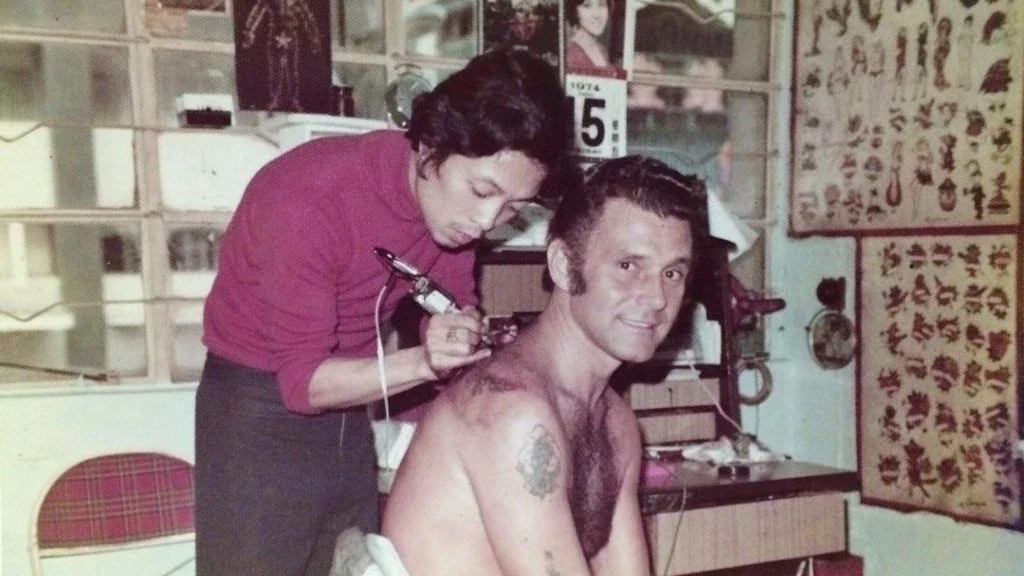
Son, Jimmy Ho, with client 1974 @jimmyhotattoo