Rose Tattoo Artist Spotlight: Hori Chiyo
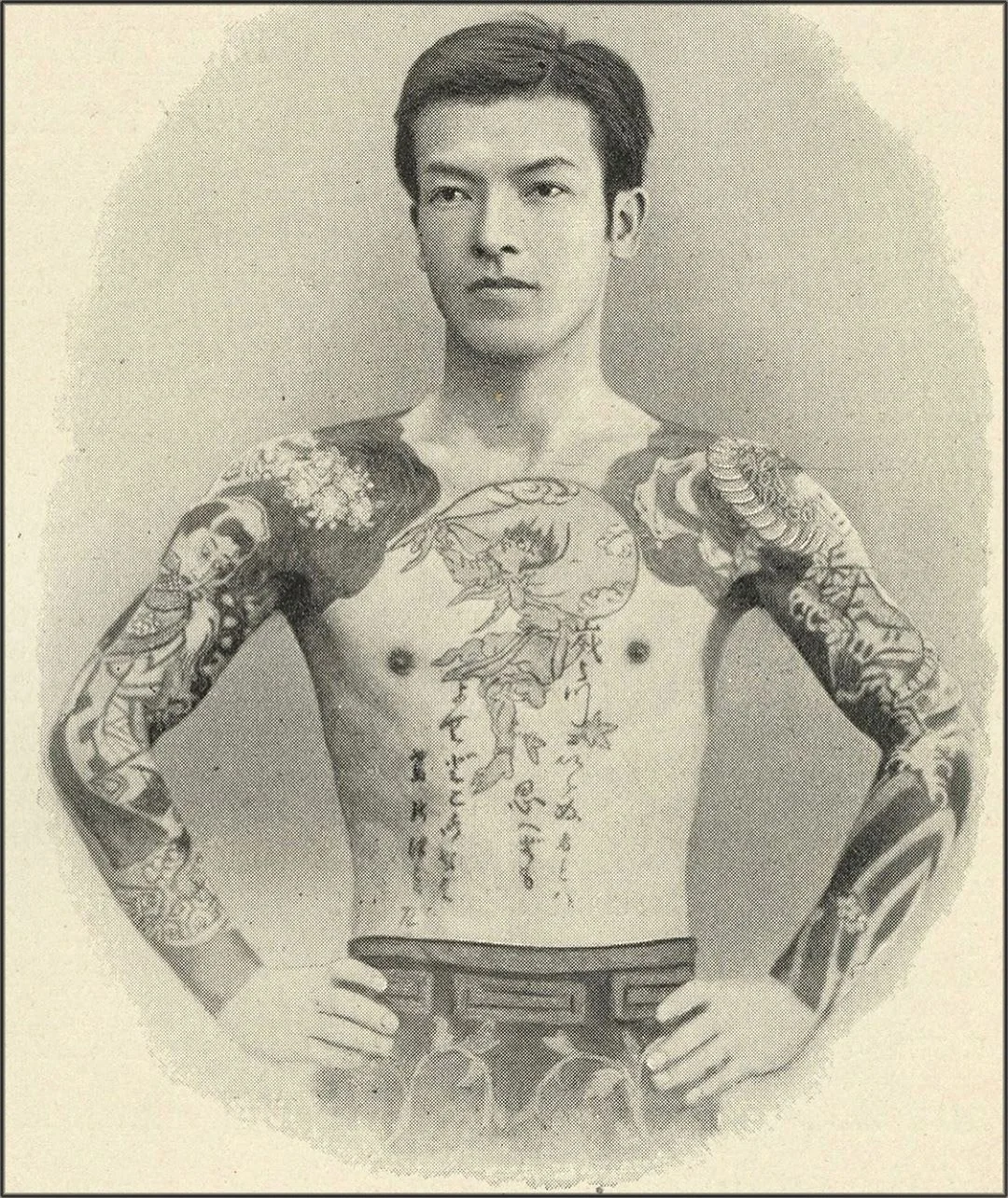
Hori Chiyo: The Tattooer Who Carried Irezumi to the World
Born in the city of Shizuoka Japan, April 20 1859, Miyazaki Tadashi, the second son of a Samurai and better known as Hori Chiyo, stands as one of the most important yet often overlooked figures in the history of tattooing. Active during Japan’s transformative Meiji era (1868–1912), he worked at a time when the country was rapidly modernizing and attempting to reshape its global image. Tattooing, once deeply embedded in Edo-period culture and closely tied to craftsmanship and ukiyo-e aesthetics, became outlawed in 1872 as Japan sought to appear more “civilized” to Western nations. Despite this prohibition, Hori Chiyo continued to practice his craft—operating within the shadows of legality while quietly helping preserve one of Japan’s most visually striking art forms.
Early Life and Rise to Fame in Yokohama
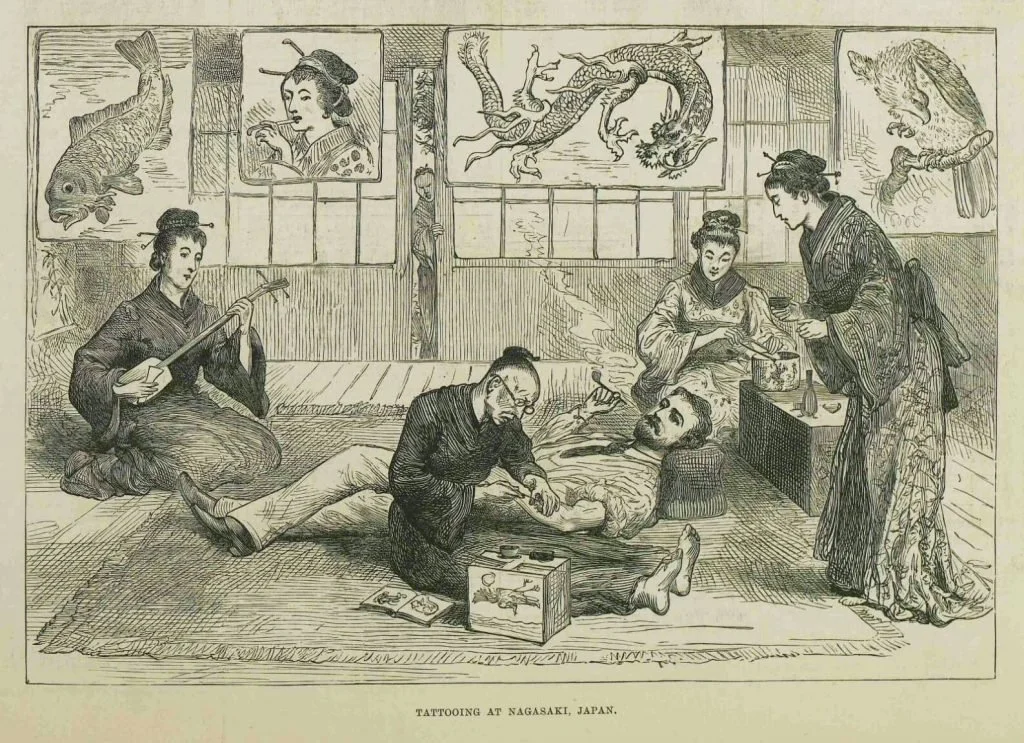
After turning 18, Miyazaki ran away from home to study at the Tokyo Fine Arts Academy. After graduating the Fine Arts Academy, he found himself apprenticing in Kyoto under Horiyasu whose mentor was Horikuma. Based in the port city of Yokohama, Hori Chiyo found himself at the center of a unique cultural exchange. Yokohama was one of the first gateways between Japan and the Western world, and it was here that foreign travelers, naval officers, and aristocrats encountered traditional Japanese tattooing for the first time. While tattooing Japanese citizens was banned, foreign clients existed in a gray area that allowed artists like Hori Chiyo to continue working. This circumstance would ultimately shape the global future of tattooing.
Hori Chiyo quickly gained a reputation for exceptional craftsmanship. His work was praised for its precision, fluidity, and painterly quality—often compared to fine brushwork. He specialized in large-scale compositions featuring dragons, mythological figures, and symbolic imagery, all executed with bold color and intricate detail. His tattoos were not isolated designs but part of a larger philosophy: the human body as a complete canvas. This approach, now fundamental to Japanese tattooing, emphasized flow, movement, and cohesion across the entire body.
The Elite and Royal Clientele of Hori Chiyo
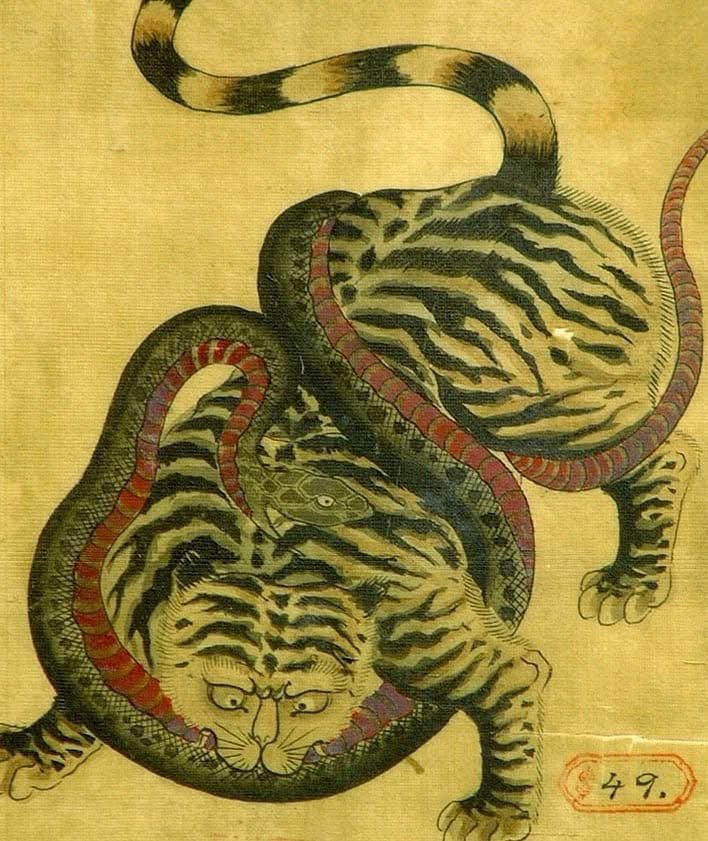
What truly set Hori Chiyo apart, however, was his clientele. He reportedly tattooed members of European royalty and elite society, including George V and Nicholas II during their travels. At a time when tattoos in the West were often associated with sailors or the fringes of society, these high-profile clients helped elevate tattooing into a symbol of worldliness, status, and cultural curiosity. Through these interactions, Hori Chiyo became one of the earliest figures to export Japanese tattooing beyond its borders, introducing irezumi to a global audience.
Descriptions of Hori Chiyo depict him as both an artist and a performer—someone who embodied the visual richness of his work in his personal presence. He was said to dress elaborately, reinforcing the idea that tattooing was not just a trade, but a form of high art. Yet much of his life remains undocumented, a result of both the underground nature of tattooing at the time and the lack of formal records. This scarcity of information has only added to his mystique, positioning him as a near-mythological figure within tattoo history.
Impact on the Tattoo Industry
Despite the gaps in documentation, Hori Chiyo’s impact is undeniable. His artistic journey was shaped by his training under Japanese woodblock printers. This would lead him into a crucial role in preserving Japanese tattooing during a period when it could have easily disappeared under legal and cultural pressure. His work and influence carried forward into future generations, shaping the lineage that would later include masters like Horiuno II and Horiyoshi III. Through this lineage, the traditions of irezumi—particularly the discipline of apprenticeship, the use of tebori (hand-poked technique), and the emphasis on large-scale composition—have survived into the modern era. His influence would expand from Japan into the professional realm of British tattooing.
Hori Chiyo’s influence extended far beyond Japan, directly shaping the evolution of Western tattooing through artists like George Burchett, often referred to as the “King of Tattooists.” During the late 19th and early 20th centuries, Burchett was part of a wave of European tattooers who became fascinated with Japanese irezumi after encountering it through tattooed travelers, naval routes, and stories of masters working in ports like Yokohama. While Burchett may not have trained directly under Hori Chiyo, the stylistic and philosophical impact is undeniable. He adopted key elements that artists like Hori Chiyo helped popularize globally—bold imagery, large-scale compositions, and the idea that tattoos could function as cohesive works of art rather than isolated symbols. Japanese motifs such as dragons, koi, and flowing backgrounds began appearing in Burchett’s work, marking a shift in Western tattooing toward more complex and narrative-driven designs. Beyond aesthetics, Burchett also embraced the elevated status of tattooing that Hori Chiyo helped establish through elite clientele, contributing to the gradual transformation of tattooing in Europe from a fringe trade into a respected artistic profession. In this way, Hori Chiyo’s indirect mentorship of Western pioneers like Burchett helped lay the foundation for the hybrid styles and global tattoo culture that define the industry today.
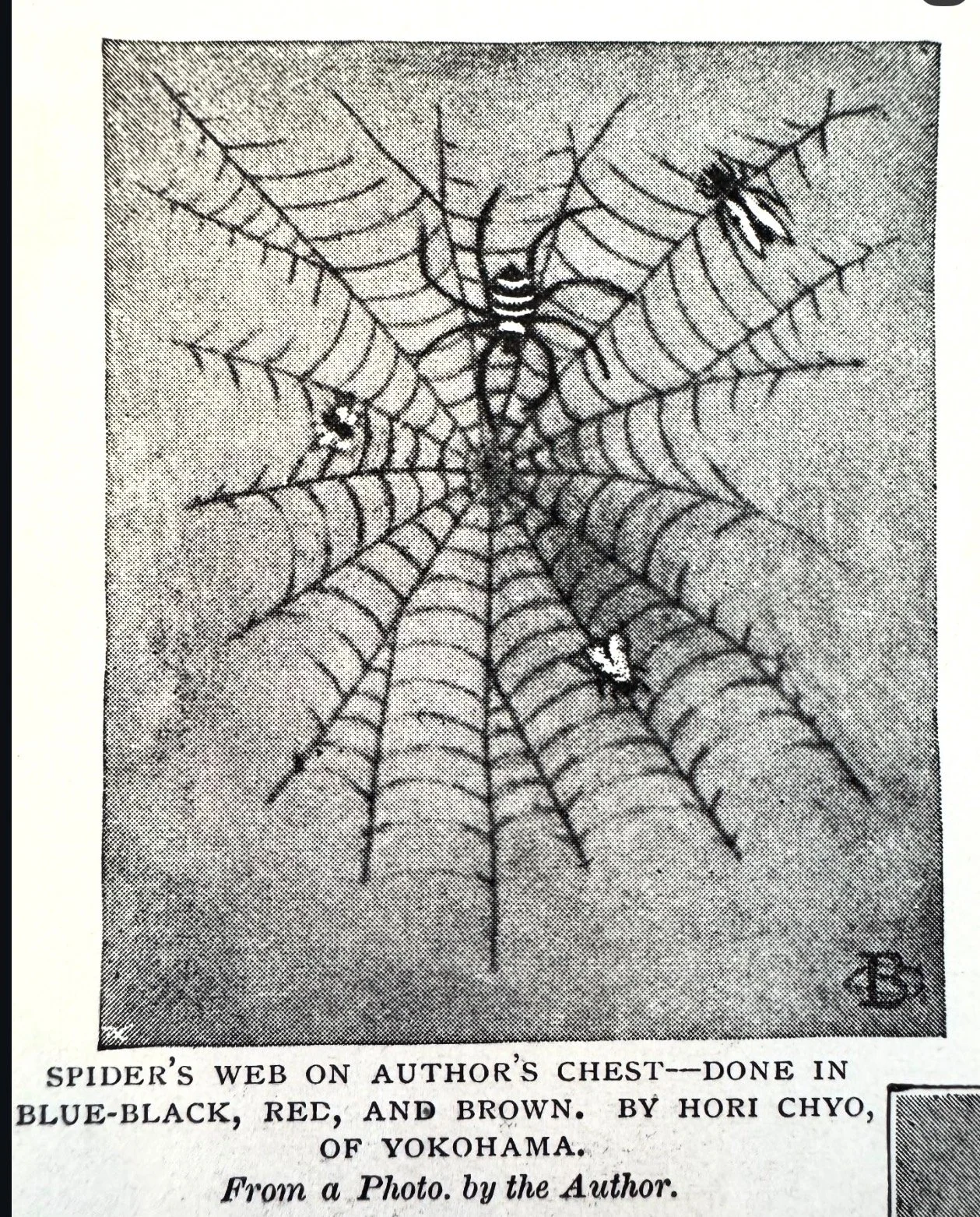
Today, the global tattoo industry still reflects the path Hori Chiyo helped create. Japanese imagery—koi fish, dragons, waves, and wind bars—has become foundational across countless styles, from American traditional to neo-traditional and beyond. The concept of full-body tattooing, or horimono, remains a defining standard among serious collectors and artists. Even the idea of traveling for a tattoo, now common worldwide, echoes the early form of tattoo tourism that developed in Yokohama during Hori Chiyo’s time.
Modern tattooing also continues to reflect the philosophical approach that artists like Hori Chiyo embodied. In traditional Japanese tattooing, work is not rushed; it is built over time through trust between artist and client. Designs are layered with symbolism and narrative, often tailored to the individual while remaining rooted in established iconography. This balance between tradition and personal expression is one of the defining characteristics of irezumi today.
Perhaps most importantly, Hori Chiyo helped redefine tattooing’s cultural position. By tattooing influential Western figures, he shifted global perception, helping transform tattoos from markers of subculture into recognized works of art. This shift laid the groundwork for the acceptance and appreciation tattooing enjoys today, both in Japan and around the world.
When Japanese law finally forced police to shut down tattoo shops, Hori Chiyo was offered patronage to by an American Businessman who paid Hori Chiyo 2,400 lbs of gold for 3 years of tattooing the businessman and his socialite friends. After the 3 years of tattooing in America, Hori Chiyo returned home to Hokkaido sometime around 1884-1900. It’s said around this time he retired from tattooing due to loss of vision from tattooing such fine details over the course of his career. It’s here that there are several accounts of his death. His family reported his death on March 17, 1900 in Sapporo claiming suicide.
Hori Chiyo’s legacy is not confined to history books—it exists in every large-scale Japanese tattoo, every artist who studies traditional composition, and every collector who seeks out the depth and meaning behind irezumi. He was more than a tattooer working in a difficult era; he was a cultural bridge, a preserver of tradition, and a catalyst for the global tattoo movement.